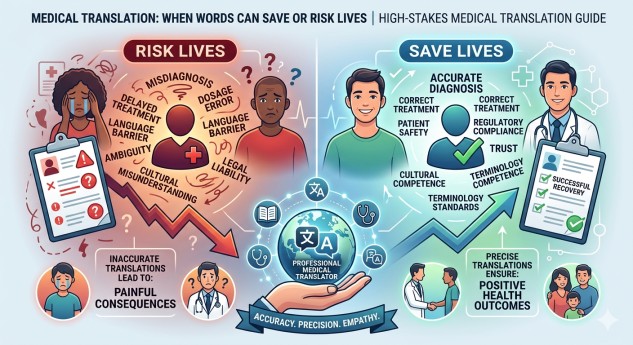
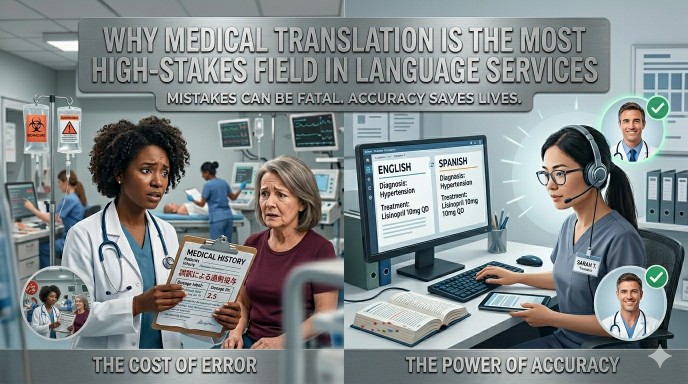
Every translation carries responsibility. But in medical translation, that responsibility is life-changing. A single error — one wrong dosage, one missed warning, or one unclear instruction — can have serious, even irreversible consequences. This is why medical translation is considered one of the highest-stakes specialties in the entire language services industry.
The Real Scope of Medical Translation
Contrary to popular belief, medical translation goes far beyond prescription leaflets. It covers a wide range of critical documents, including:
- Clinical trial protocols and regulatory dossiers
- Informed consent forms and patient information leaflets
- Pharmaceutical labeling and package inserts
- Medical device manuals and Instructions for Use (IFU)
- Scientific research papers and journal articles
- Hospital discharge summaries and patient records
- Public health campaigns and awareness materials
Each document type requires a different balance of technical precision, regulatory compliance, and reader-friendly language.
The Complex Language of Medicine
Medical language is a world of its own — built on Latin and Greek roots, international codes (like ICD and MedDRA), and highly specialized terminology. A skilled medical translator knows when to use clinical terms like “hypertension” and when to simplify to “high blood pressure” for patients.
They also handle challenges such as false cognates, evolving scientific terms, and the need for absolute consistency across large document sets. In medical translation, inconsistency is not just poor style — it can be a regulatory violation.
Regulatory Requirements: More Than Just Translation
Medical translation is strictly regulated. Authorities like the FDA, EMA, WHO, and national health agencies demand accurate, certified translations for drug approvals and clinical trials.
Following ICH guidelines, pharmaceutical companies must submit high-quality translations as part of their regulatory filings. Any mistake can delay market approval, trigger costly revisions, or lead to rejection.
In this field, translation is not optional — it is a legal and compliance requirement.
Informed Consent: The Most Human Responsibility
Translating informed consent forms is one of the most sensitive tasks. Clinical trial participants must fully understand the study’s purpose, risks, benefits, and their rights — in their own language.
“Participation by individuals capable of giving informed consent must be voluntary.” — Declaration of Helsinki
A good medical translator ensures the text is not only accurate but also clear, culturally appropriate, and easy to understand.
The Human Impact Behind Every Word
At its core, medical translation is about people. Patients, caregivers, and trial participants depend on these translations to make informed, often life-changing decisions. A well-translated document can improve health outcomes. A poorly translated one can cause confusion, mistrust, or harm.
What Makes a Professional Medical Translator Qualified?
This is not a field for general translators. Top medical translators usually have:
- Formal training in translation studies
- Strong background in medicine, pharmacy, biology, or life sciences
- Experience with regulatory frameworks
- Proficiency in translation tools and quality processes (including back-translation and expert review)
They often hold certifications from respected organizations like the American Translators Association (ATA) and follow strict ethical and quality standards.
The High Cost of Errors
Mistakes in medical translation can lead to:
- Patient safety issues
- Regulatory delays and financial losses
- Compromised clinical data
- Damage to trust in healthcare systems
Language quality directly affects both patient safety and the success of global clinical trials.
Why Medical Translation Stands Apart
Medical translation sits at the crossroads of science, law, ethics, and clear human communication. It demands exceptional skill, deep knowledge, and immense attention to detail.
The translator’s name may rarely appear on the final document, but their expertise is present in every word that reaches patients and healthcare professionals worldwide.
_______________________________________________________________________________________
Have you worked in medical translation, clinical research, or regulatory affairs? What challenges have you faced? Share your experiences in the comments below.
If you're looking for professional medical translation services, feel free to reach out — accuracy matters.
Related Articles
💬 0 Comments
No comments yet. Be the first to share your thoughts!
✍️ Leave a Comment
Your comment will be reviewed before publishing. Fields marked * are required.